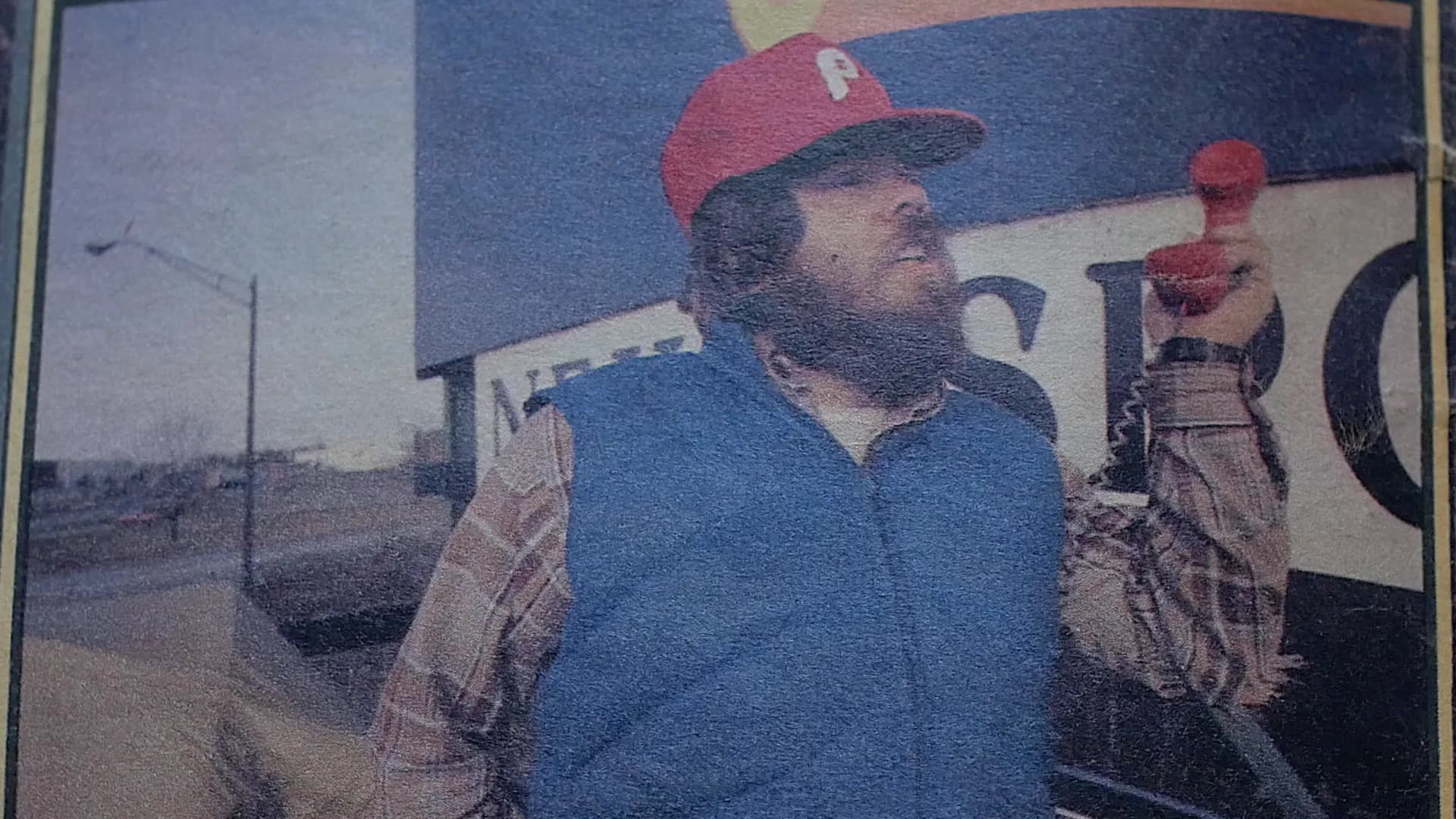
Billboard Mike47,000 entries
Mike MacKay
“I Need A Home”
Mike MacKay entered the contest 47,000 times. A stocky, bearded loudmouth who never met a room he didn’t want to own. His wife Linda just wanted him to come home. Mike wanted to be famous.
Based on a true story
Three men. A billboard. And the American Dream.
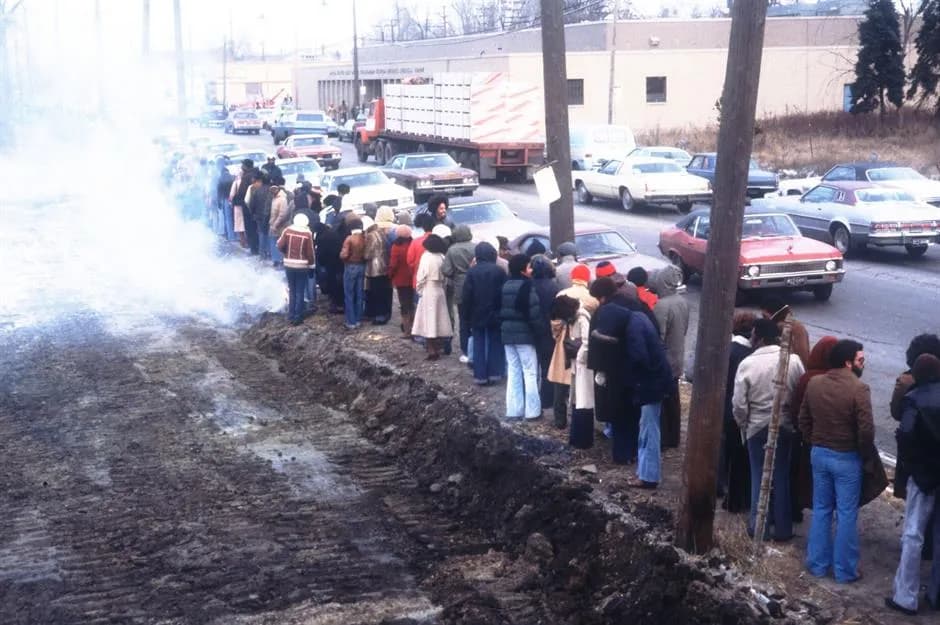
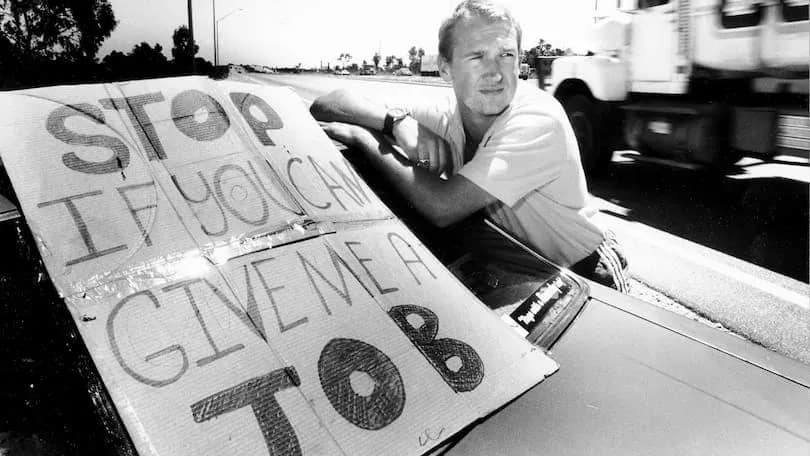
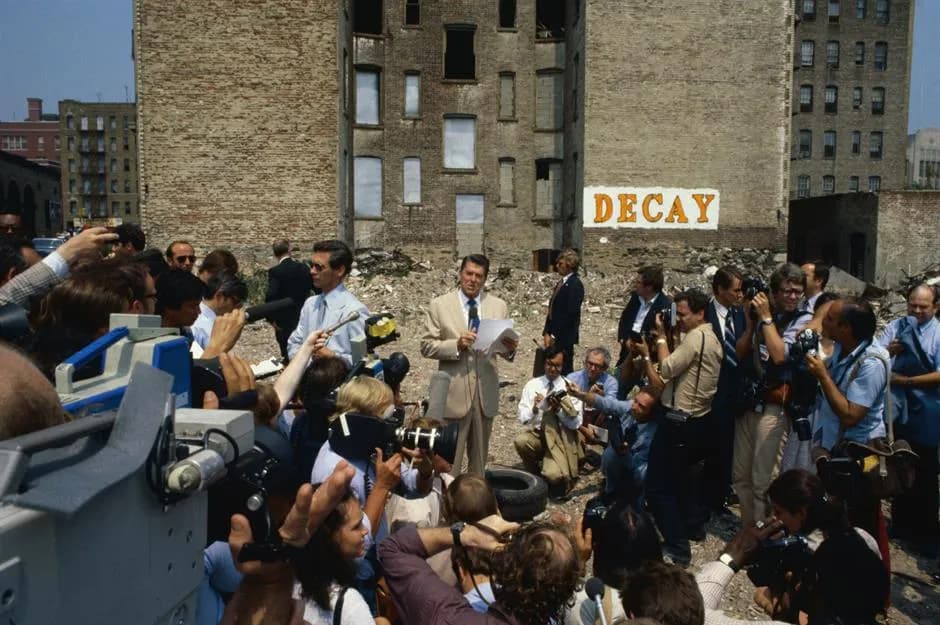
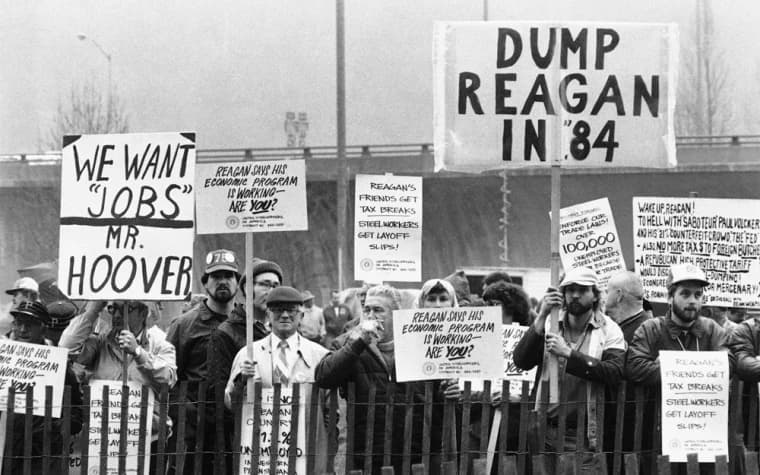
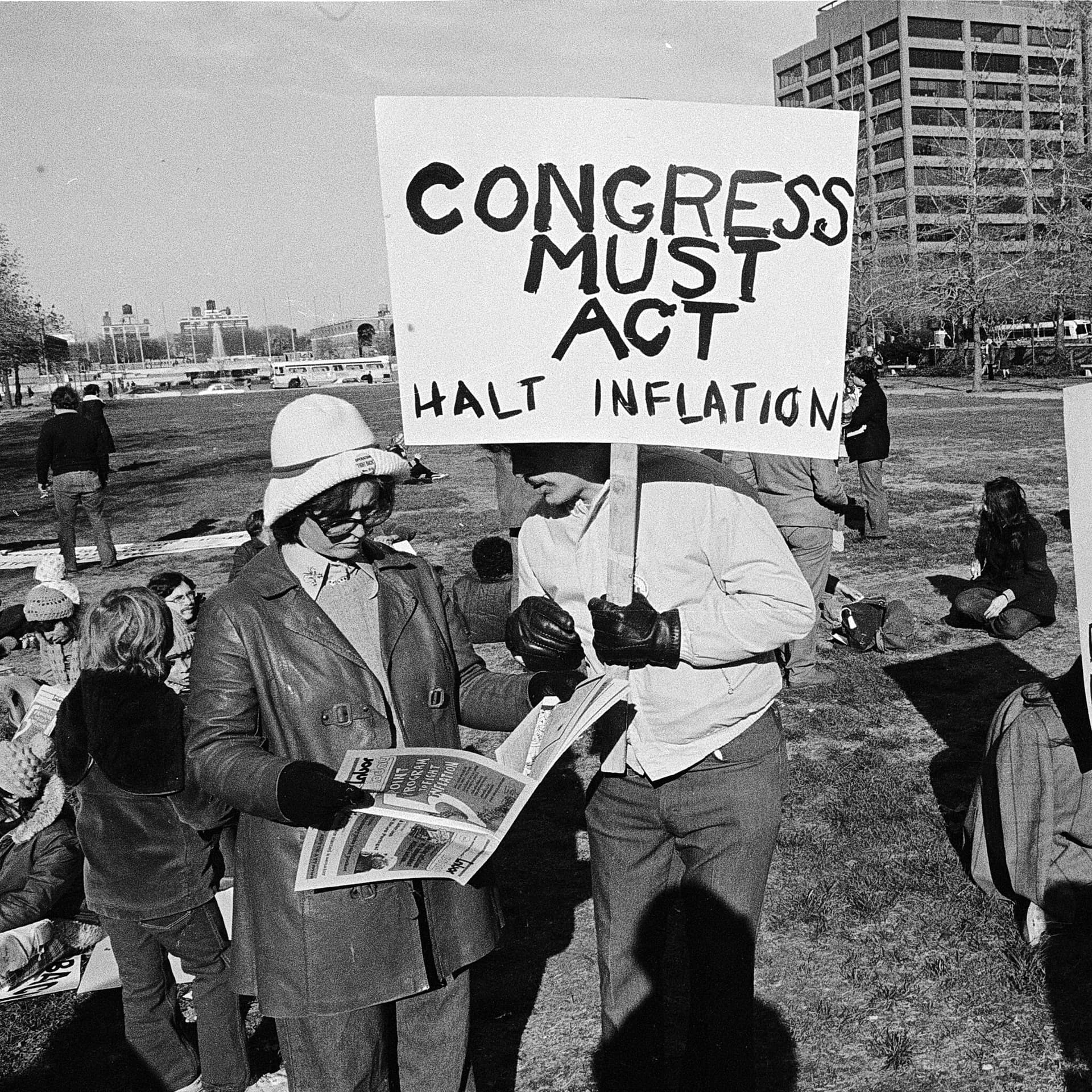
For the people of Allentown, the American Dream wasn’t slipping away.
It was already gone.
You’ll Love to Live With Us
Tell us why you deserve a shot, in 25 words or less.
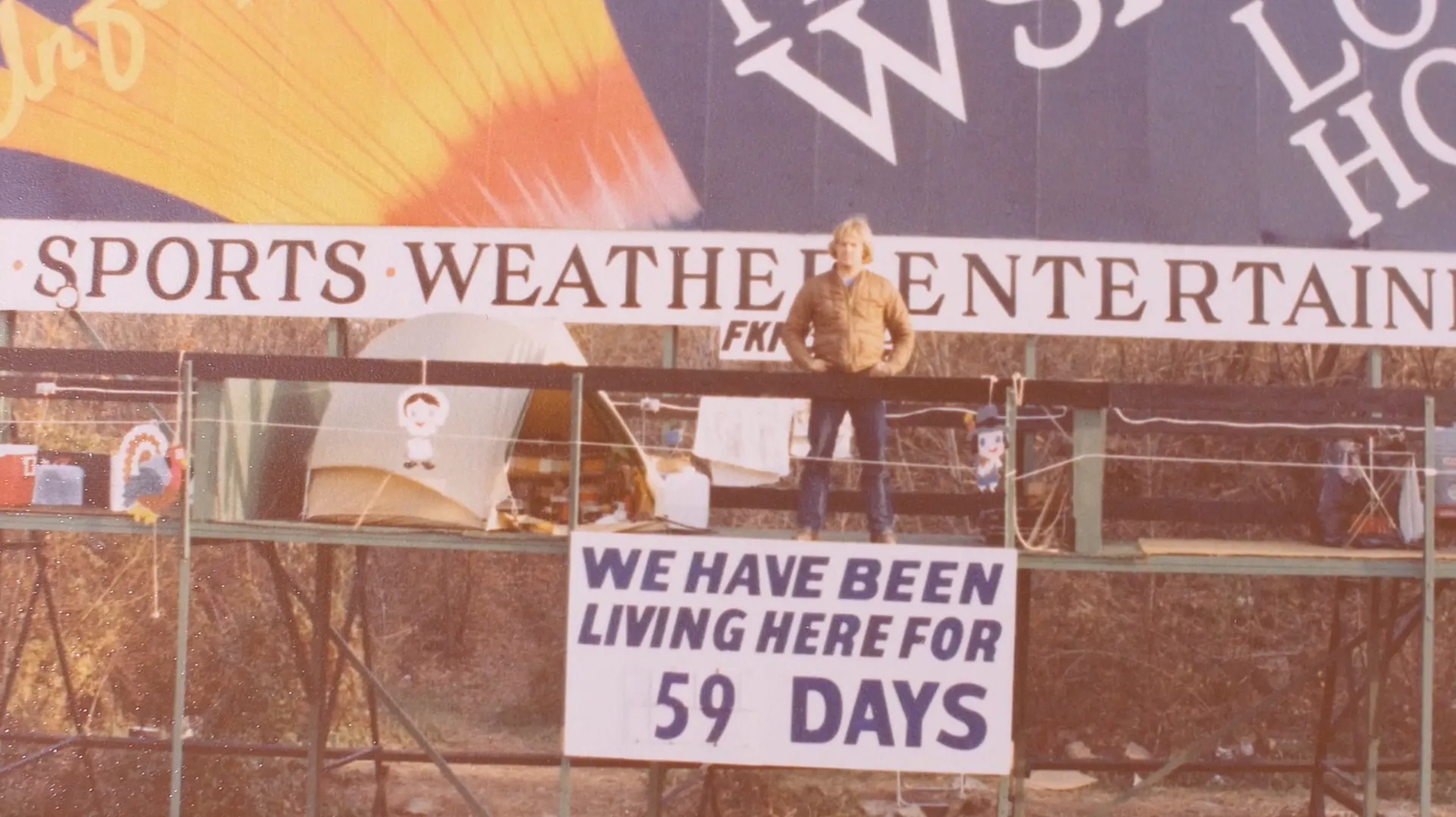
Life up there
A tent, a telephone, and twenty square feet to call home.
Archive footage: Billboard Boys, a film by Pat Taggart, Owl Town Productions
Billboard Mike47,000 entries
“I Need A Home”
Mike MacKay entered the contest 47,000 times. A stocky, bearded loudmouth who never met a room he didn’t want to own. His wife Linda just wanted him to come home. Mike wanted to be famous.
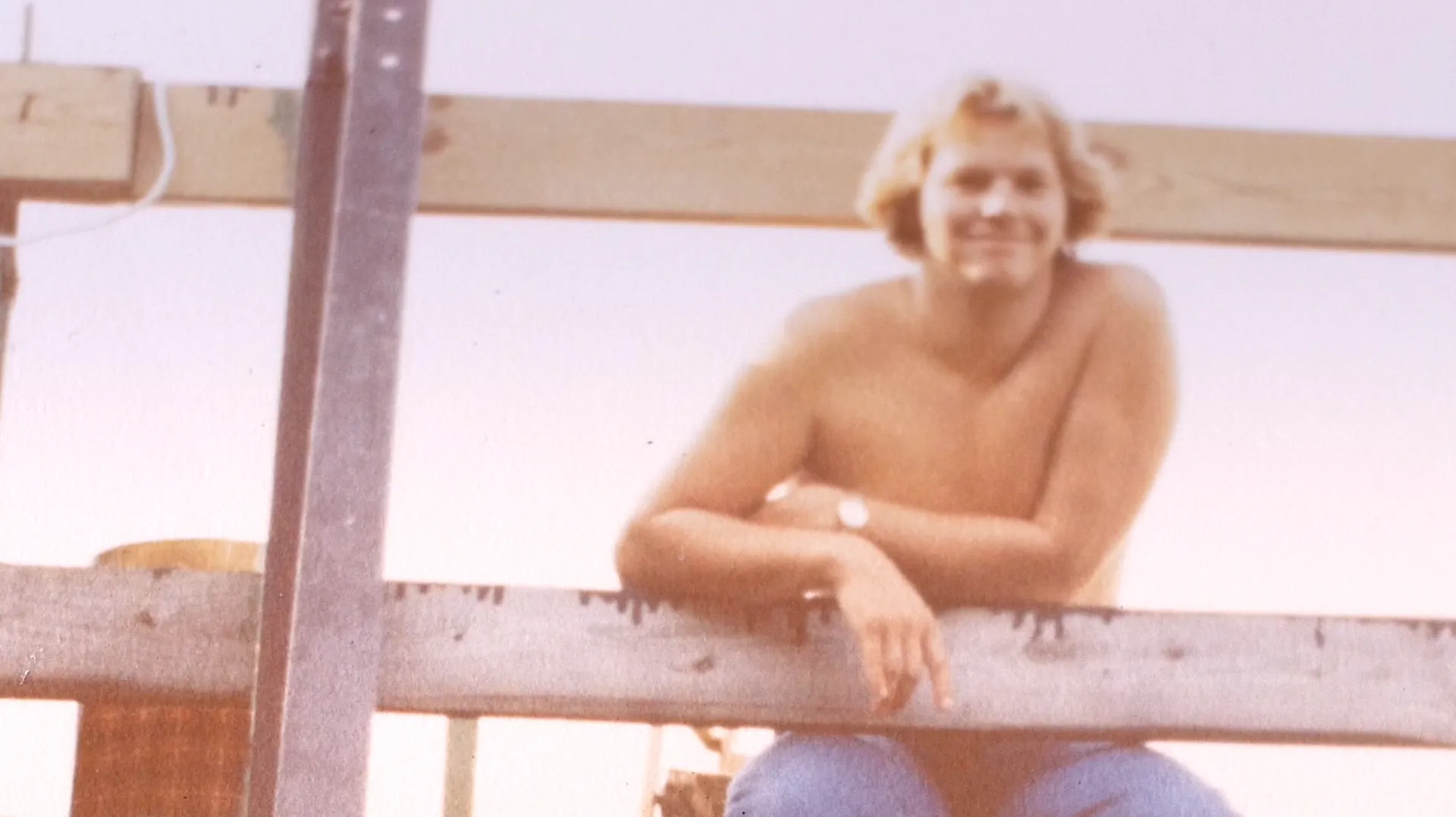
The Quiet Warrior4,004 entries
“Due to the high cost of living, I may never be able to purchase a home of my own.”
Ron Kistler was 25, a house painter who picked up trucking shifts when he could find them. Quiet. Stubborn. He had a piece of land, a girl named Sue, and no way to build a life with either one.
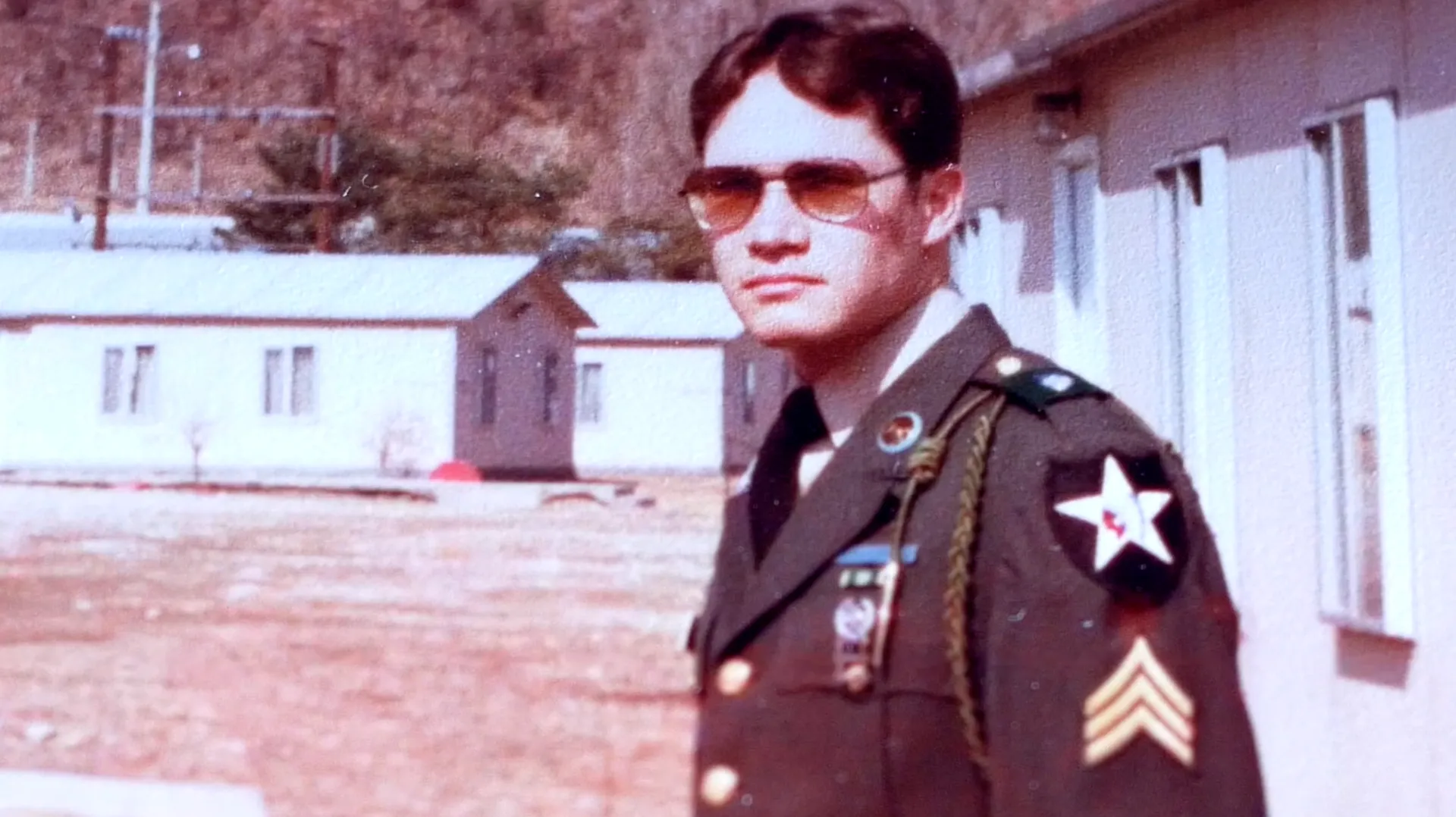
The TelepathEntered by his mother
“I could live indefinitely on a billboard.”
His mother entered him while he slept. Dalton was 22, an Army veteran fresh out of Korea, unemployed, doing karate in his underwear in his childhood bedroom. He didn’t volunteer for this.
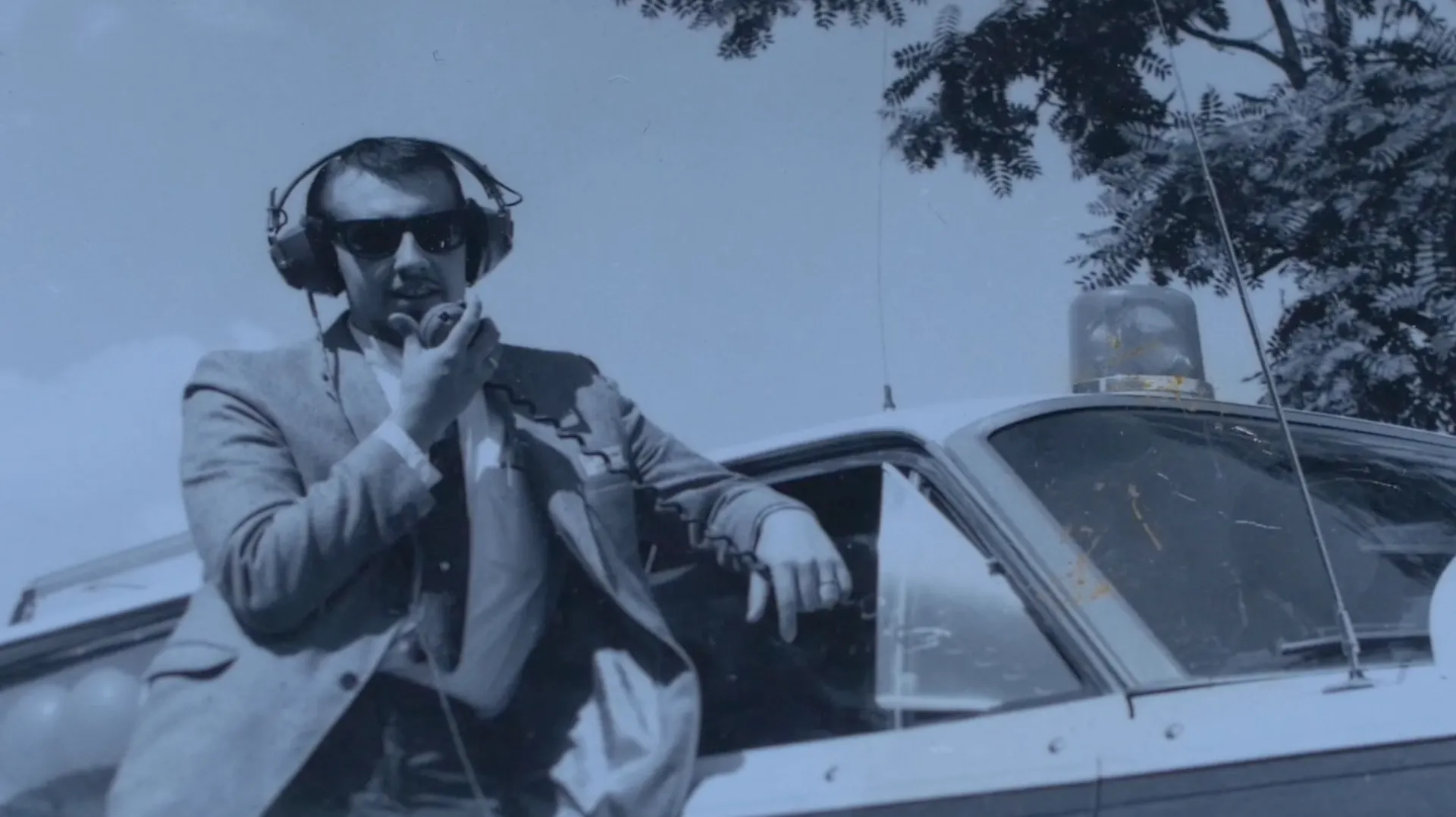
The Marketer
“Part publicity stunt, part social experiment, part act of accidental cruelty.”
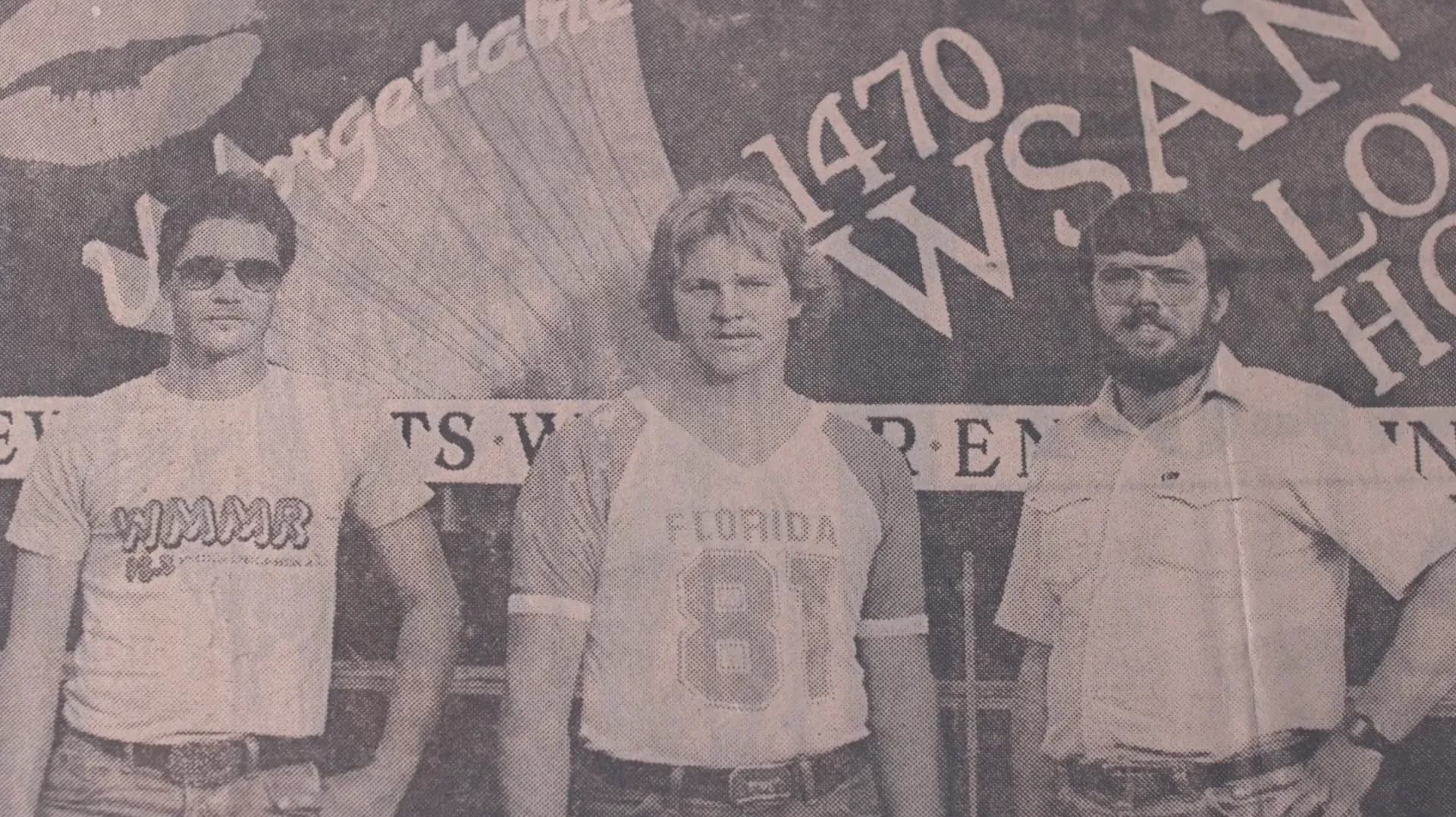
Harold Fulmer’s right-hand man at WSAN. When Rick Musselman of the station brought in the idea of a living billboard, Krajsa and Fulmer built it out. He wore the fanciest suit an AM radio salary could buy, and when it spiraled out of control, he was the one who had to defend it on national television.
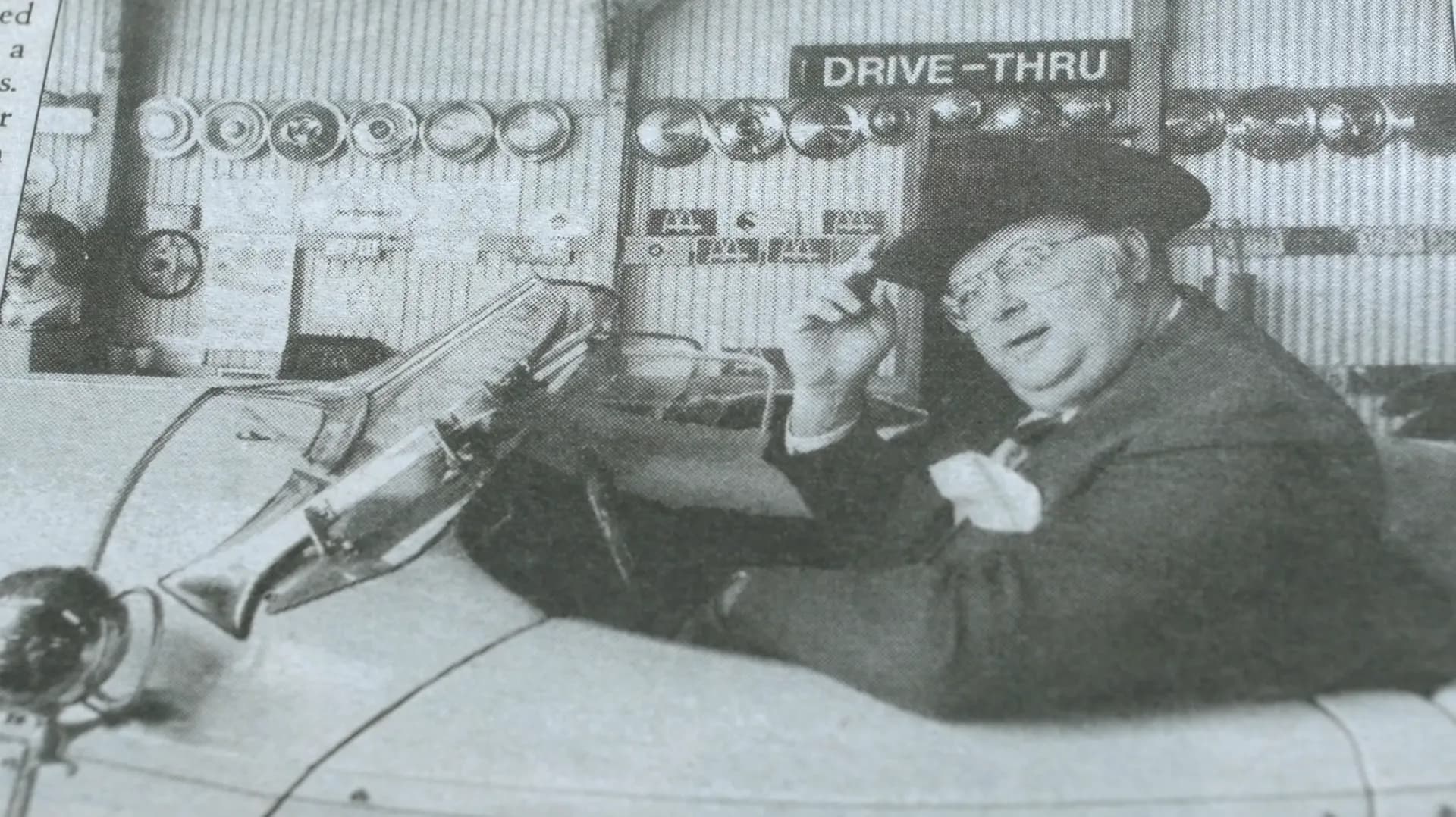
The McMillionaire
“He didn’t believe in handouts. He believed in hand-ups.”
Harold Fulmer drove a 1937 Rolls-Royce Phantom III, wore a ten-gallon hat, and owned WSAN. A self-made millionaire who believed these three men should earn their home the same way he earned his.
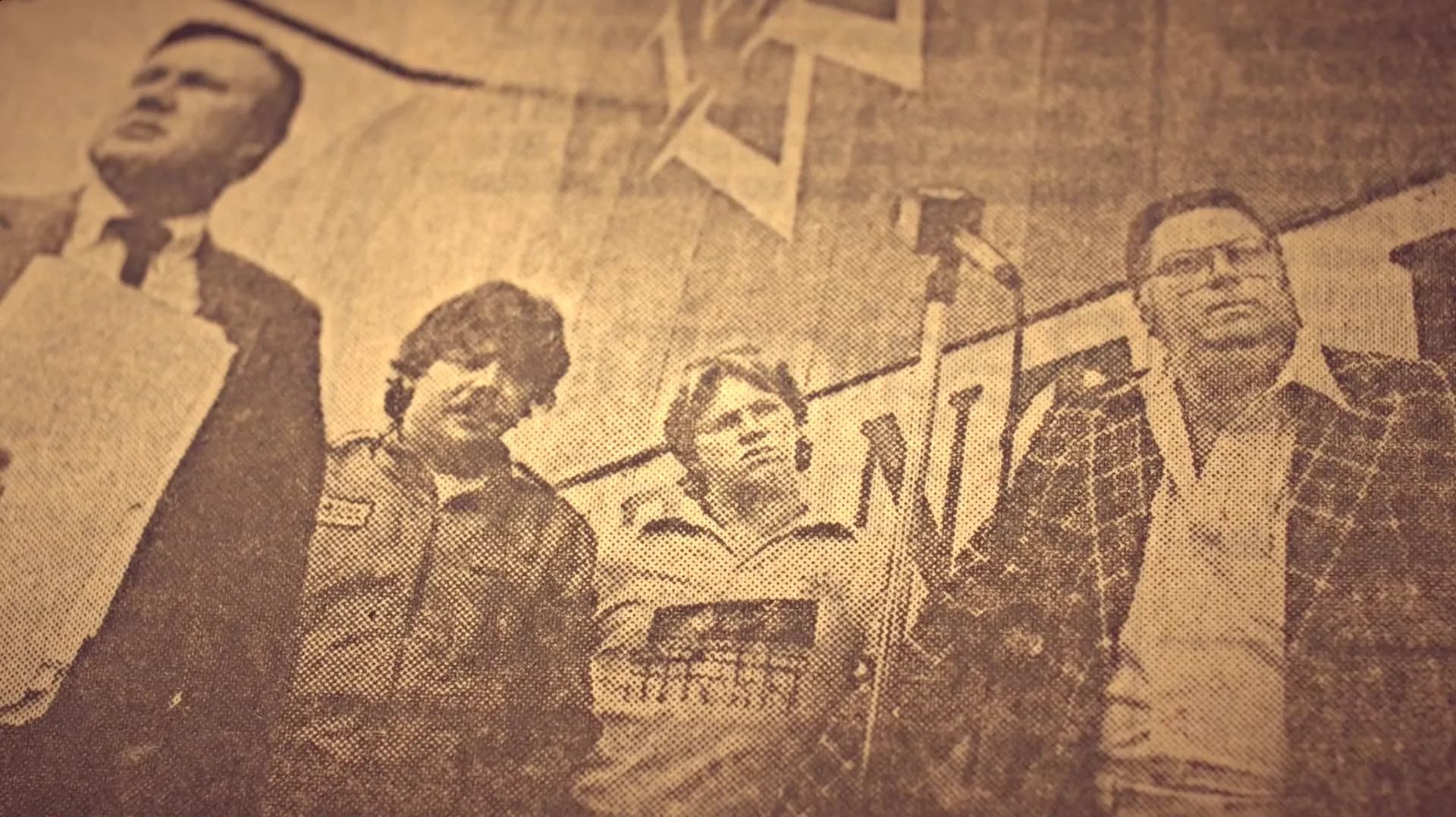
Three men climb a billboard above Route 22.
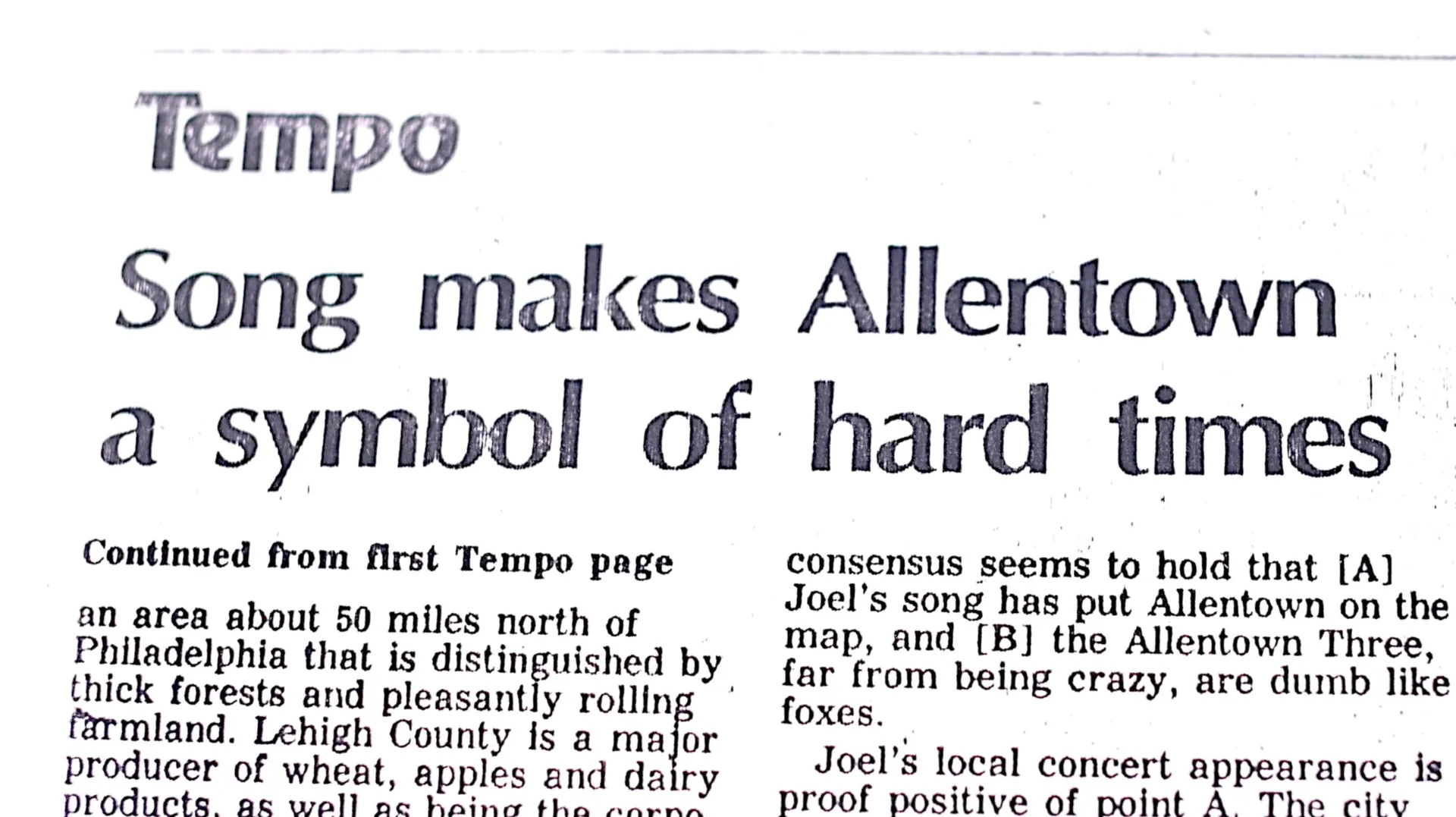
Billy Joel releases “Allentown.”
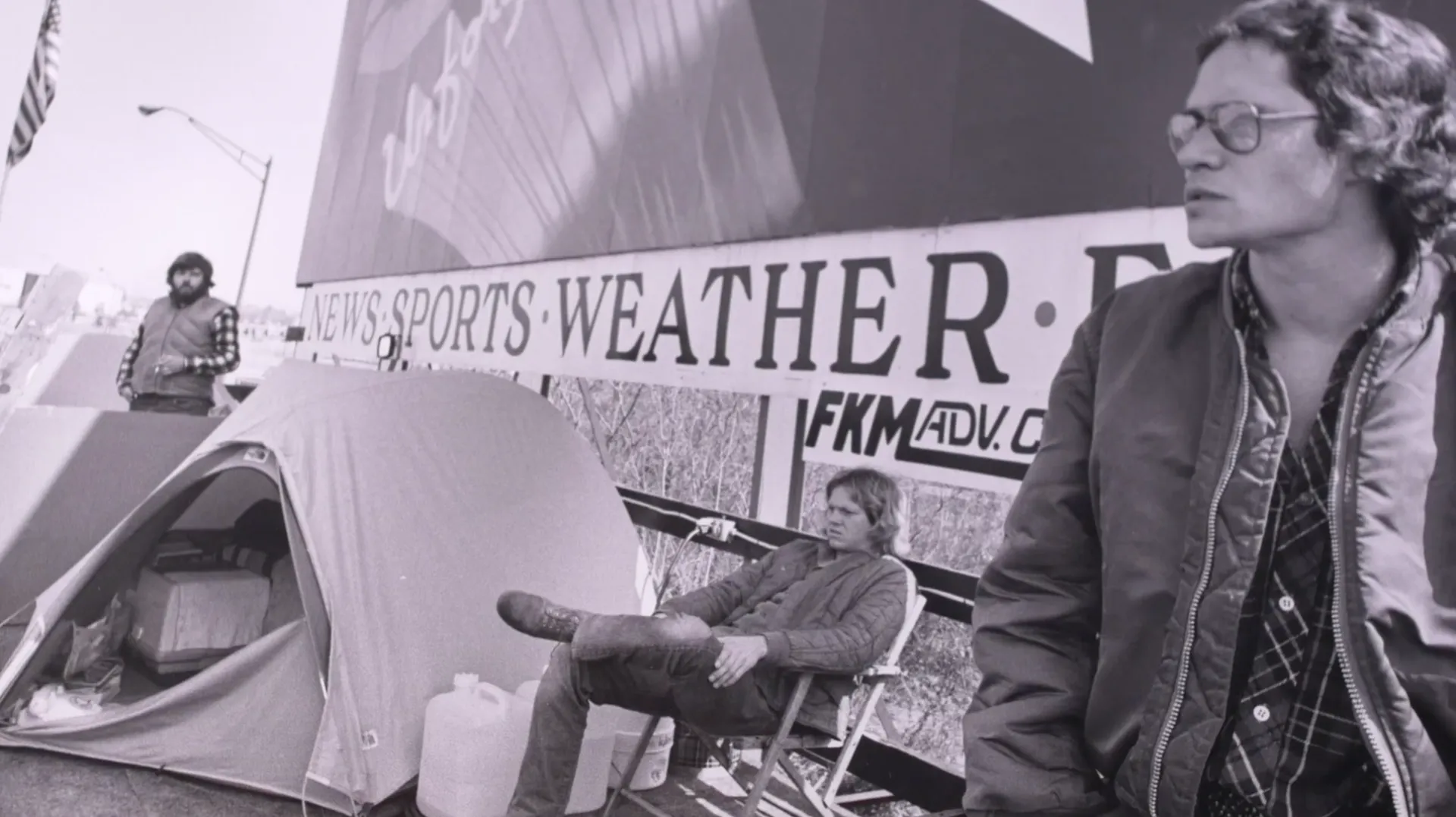
Nobody comes down. The station figured it would be over by now.
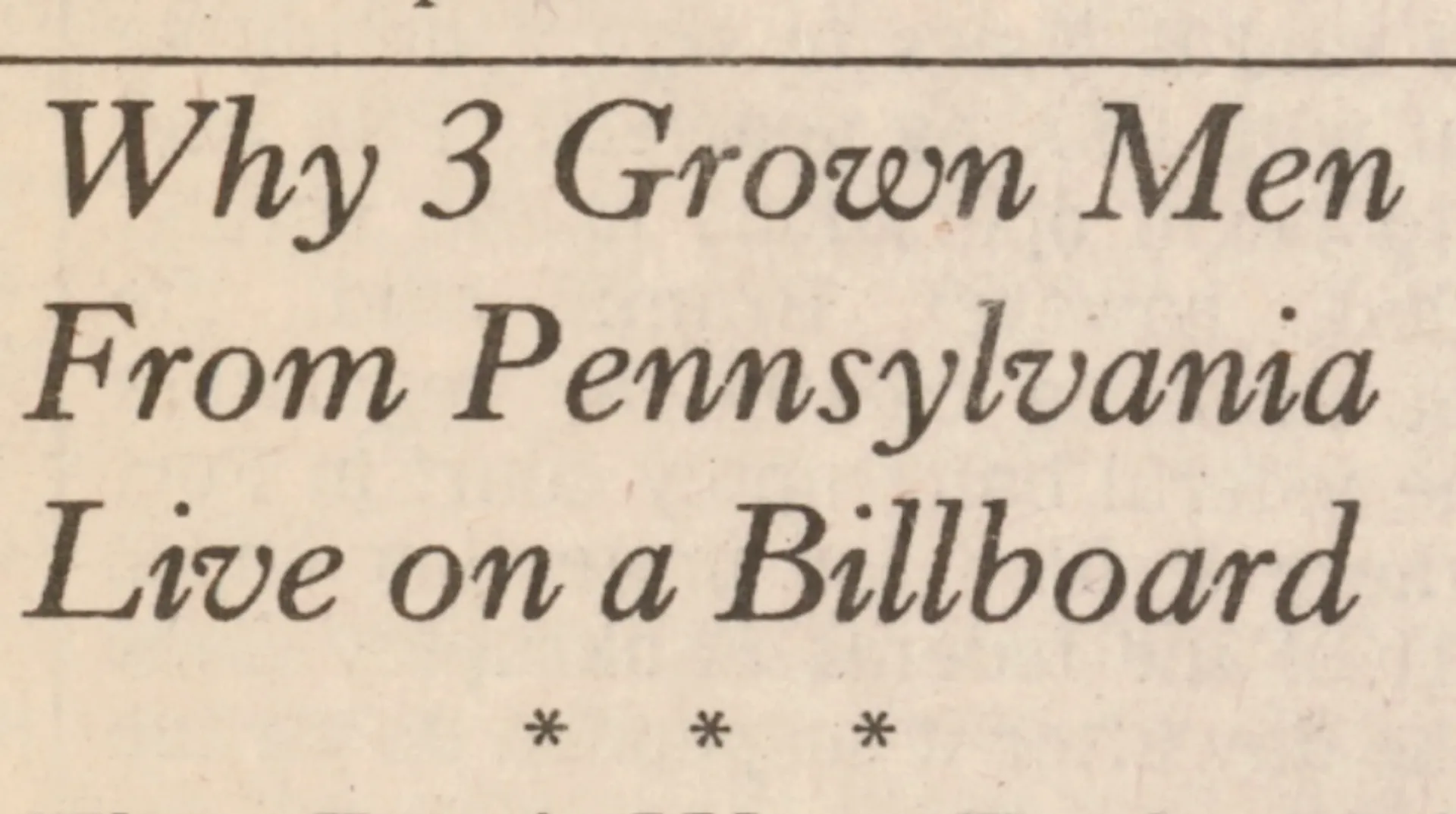
The Wall Street Journal puts the story on the front page.
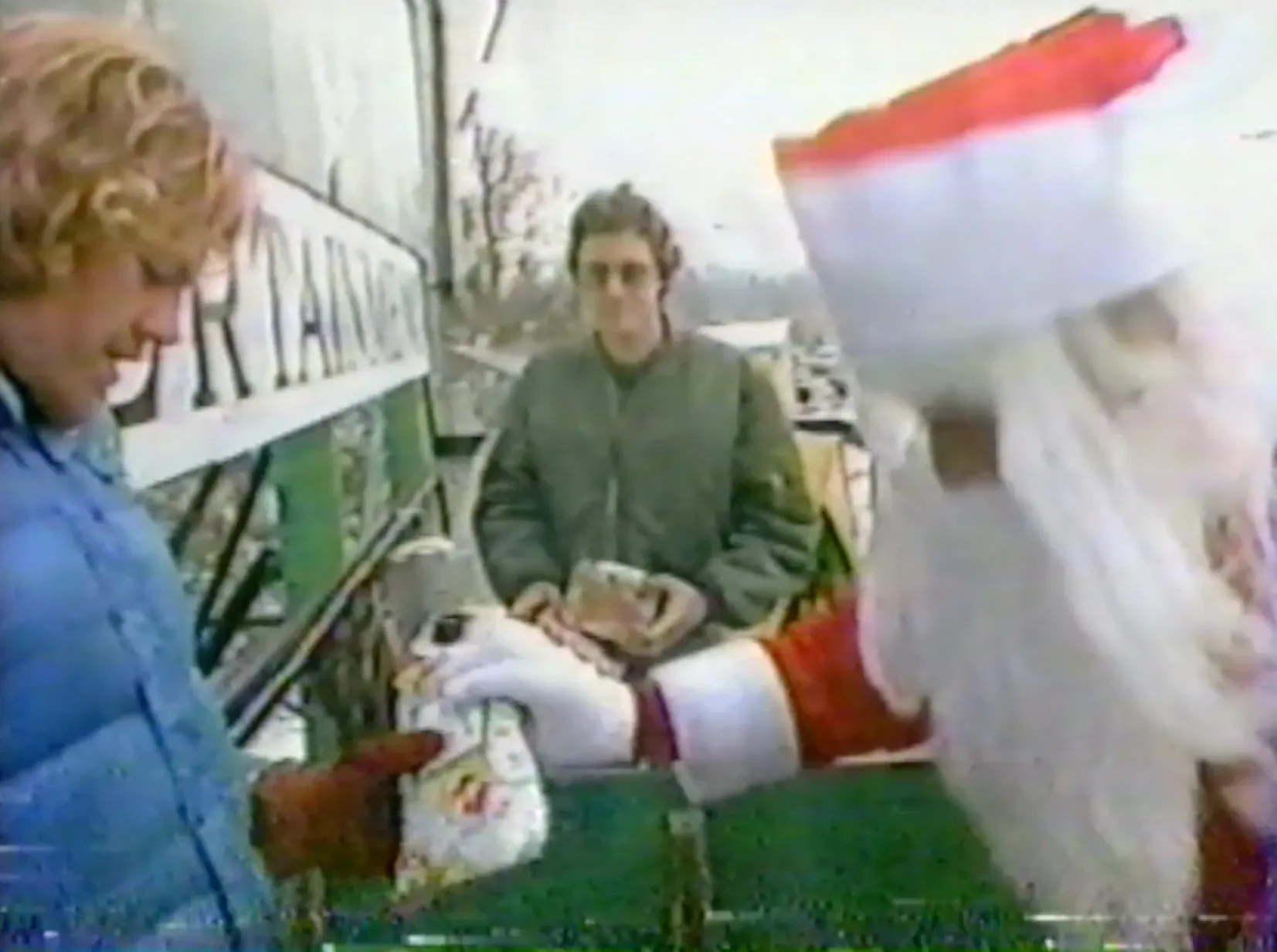
Christmas on the billboard.
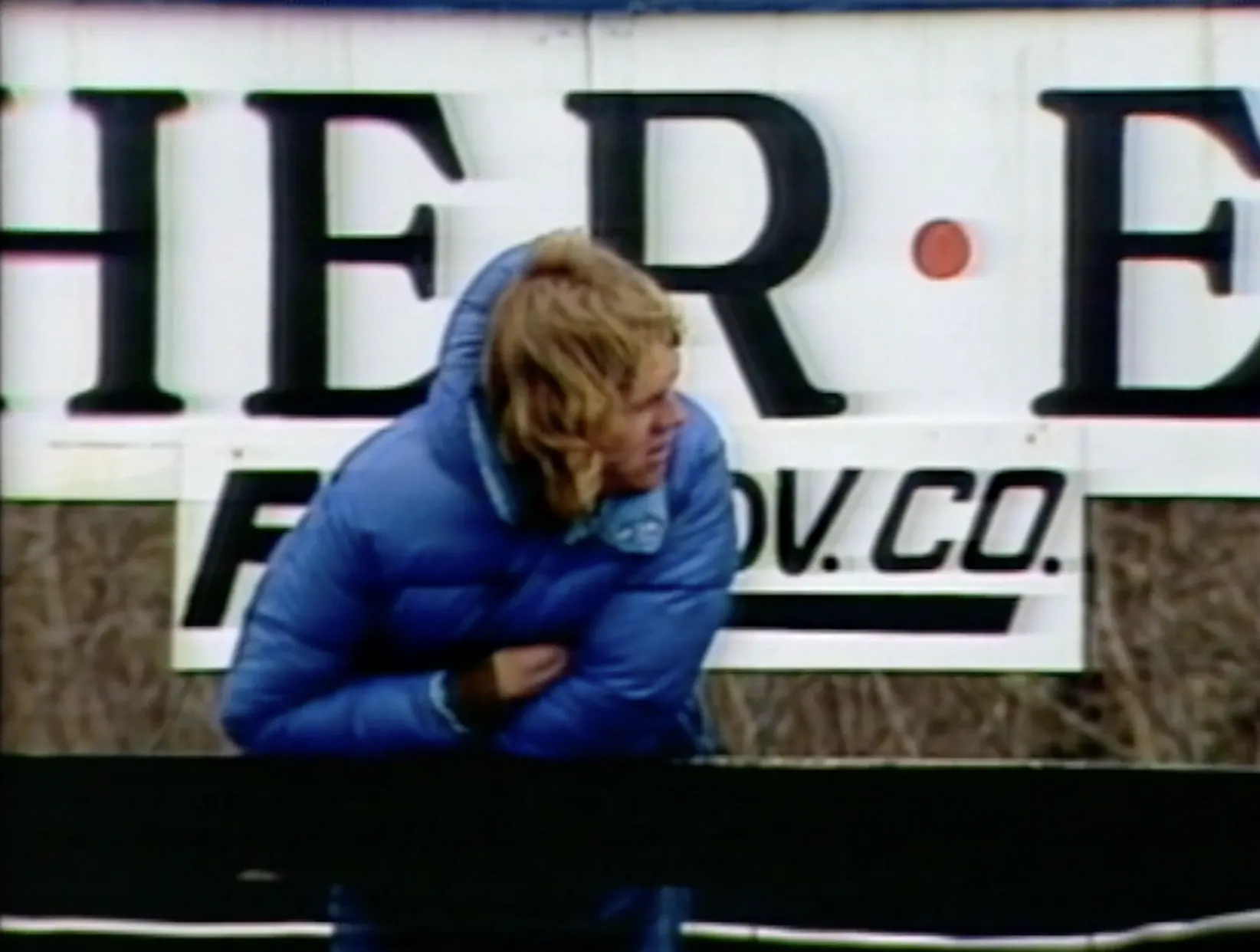
A record blizzard. Three strangers huddle in one tent to survive.
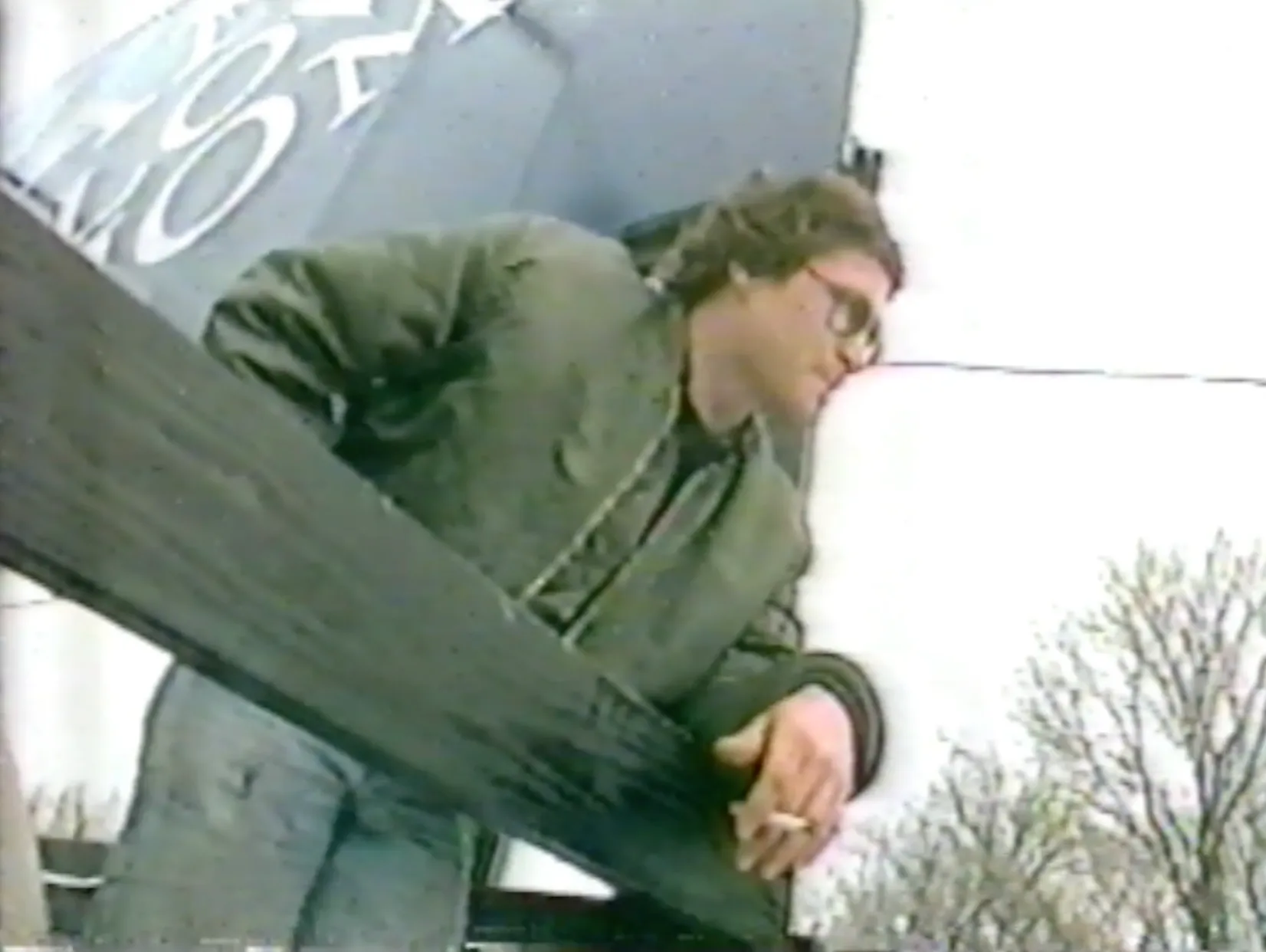
Dalton Young is arrested and removed.
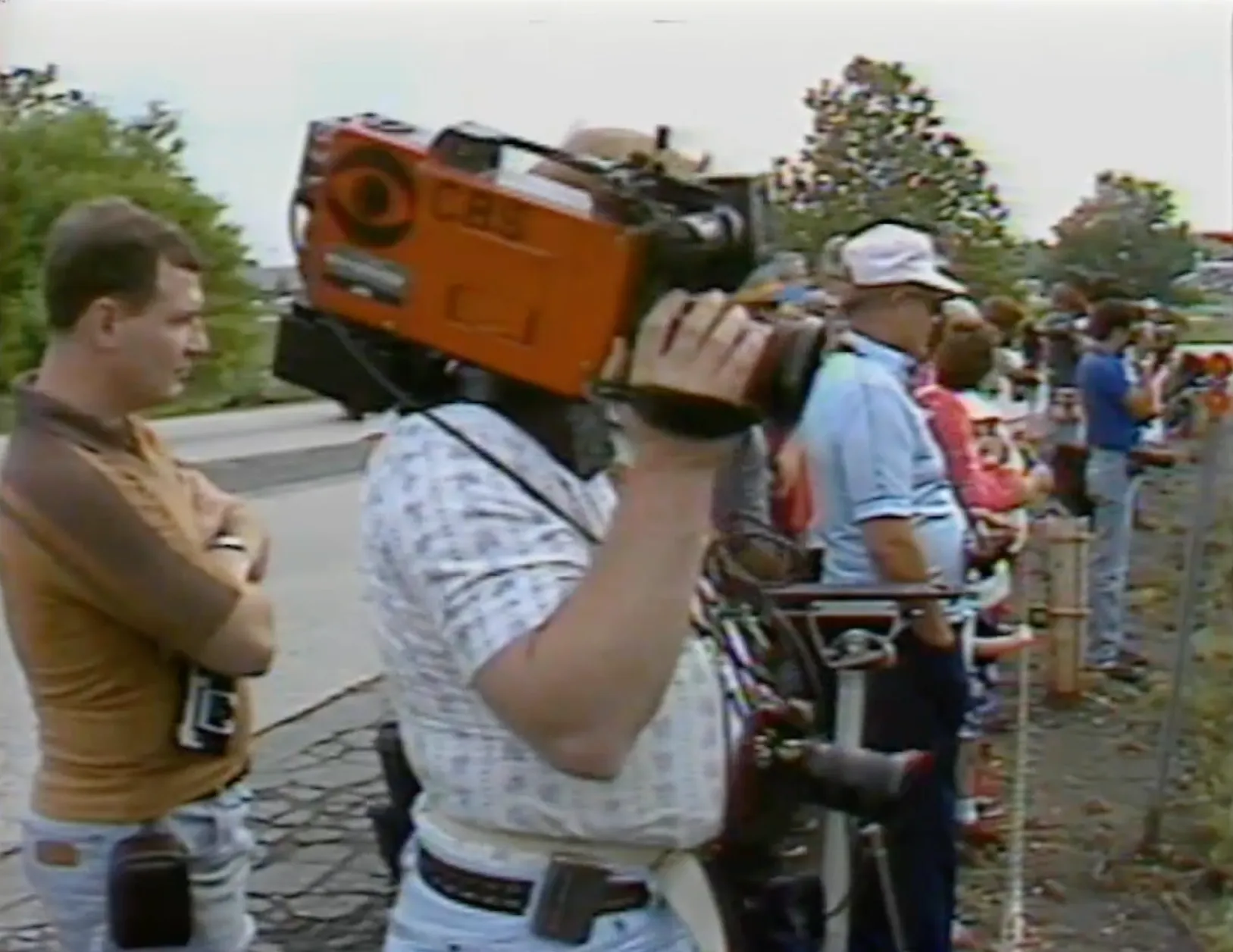
Whitehall Township sends them a tax bill. That month, Phil Donahue takes up their case.
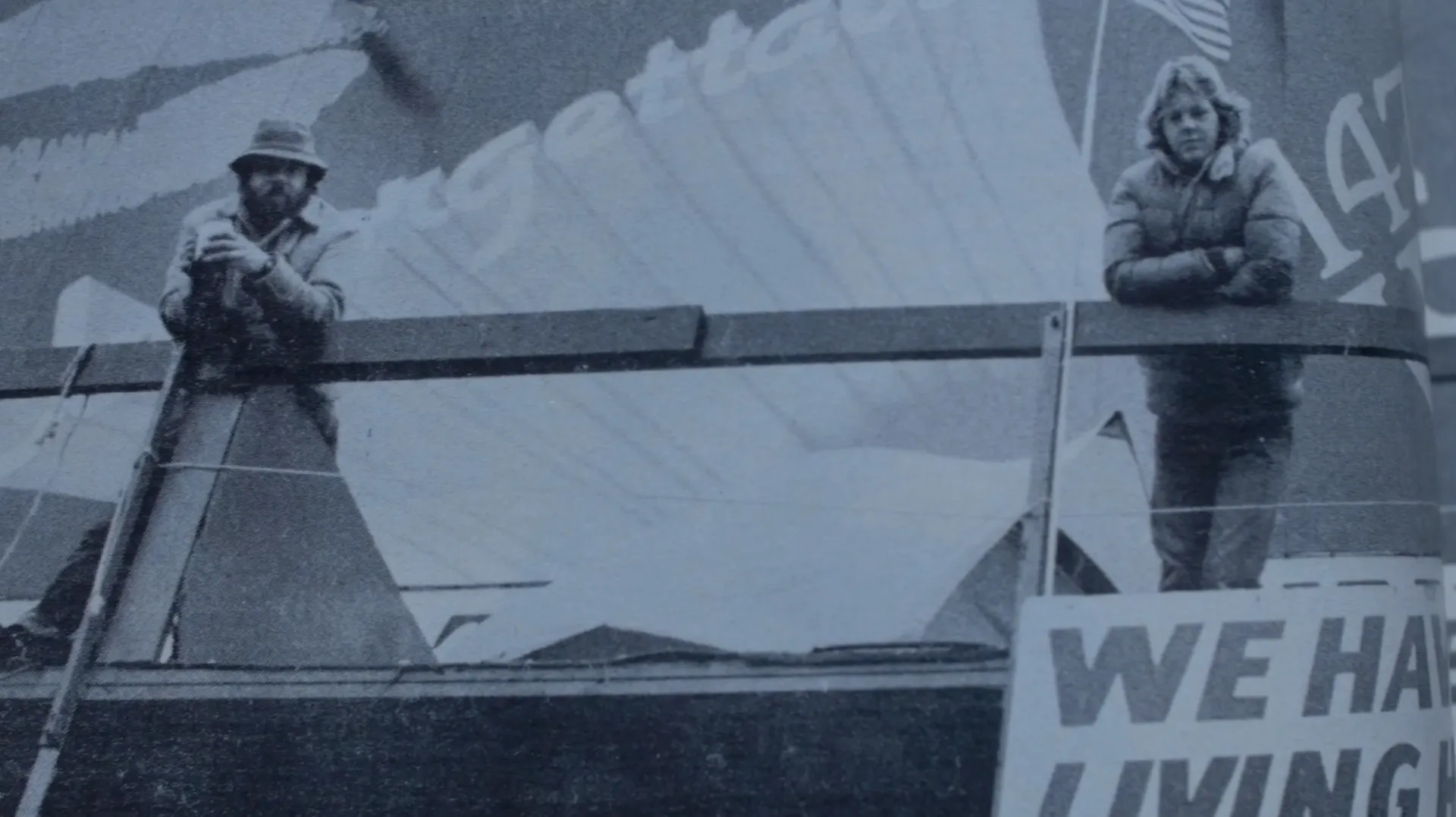
Two men remain. One makes a decision.
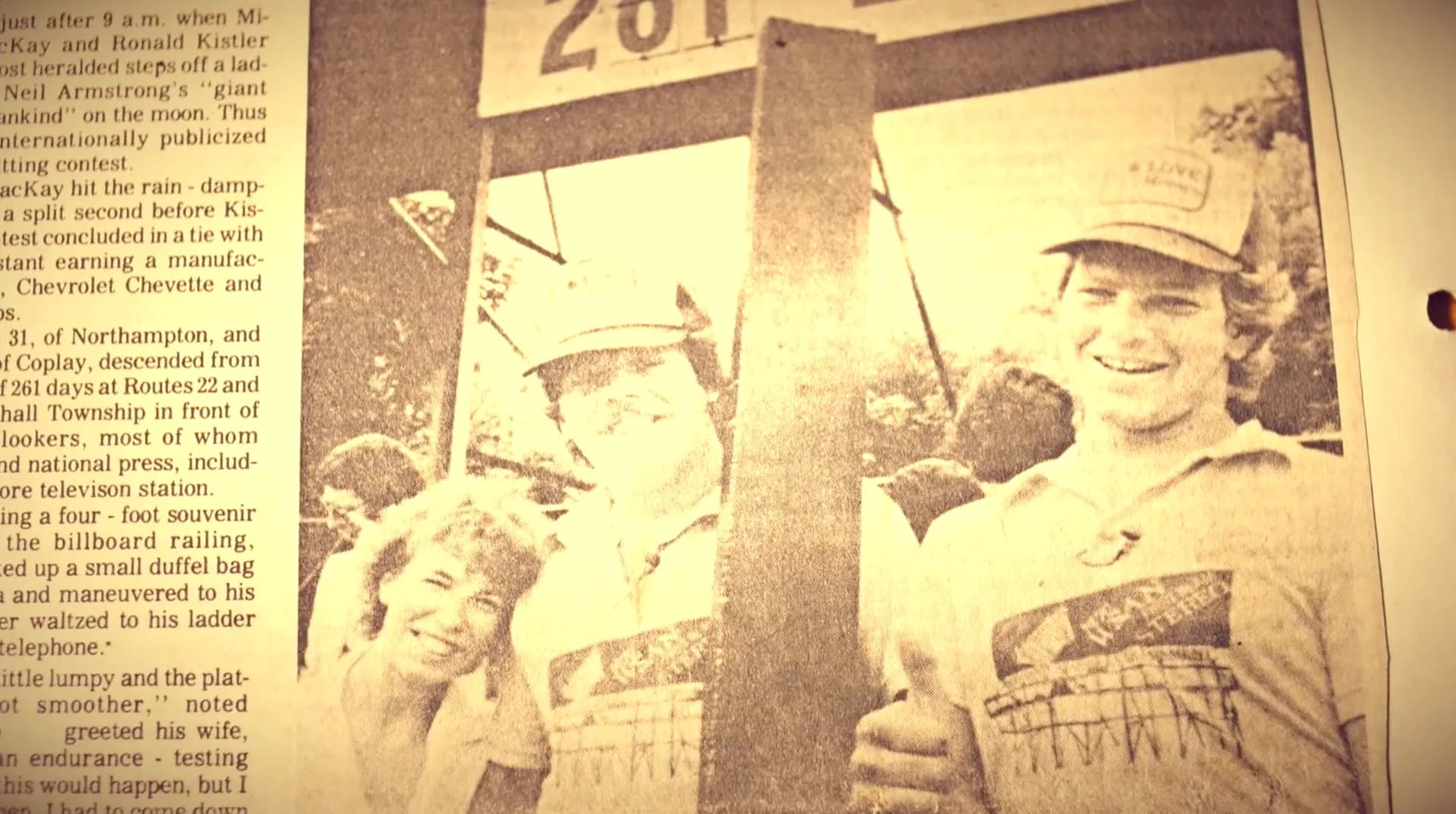
It ends the way no one expected.
“You can tell the story of the United States through that billboard contest.”
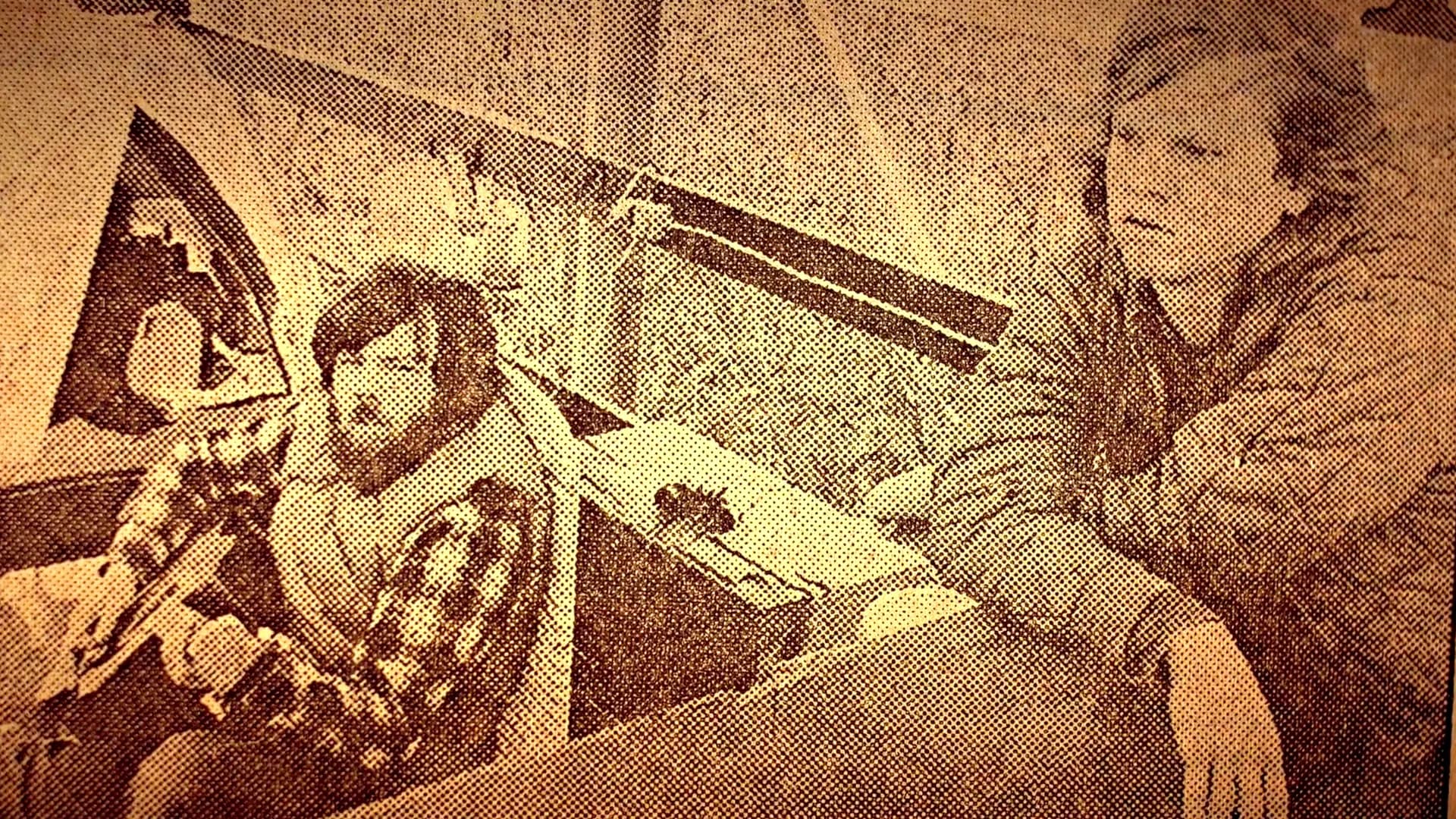
The Film
In 1982, a radio competition in recession-hit Allentown offered desperate locals the chance to win a home by living on a billboard. Braving the worst winter in forty years, a media circus and police entrapment, three blue collar men would spend 261 days on top of that billboard fighting for the American Dream.
A film that lives in the space between absurdity and heartbreak, where the biggest laughs come from the most desperate circumstances and the most moving moments sneak up on you sideways.
A comedy about survival. A drama about dignity. And a love letter to the people who build their lives with whatever they’ve got.
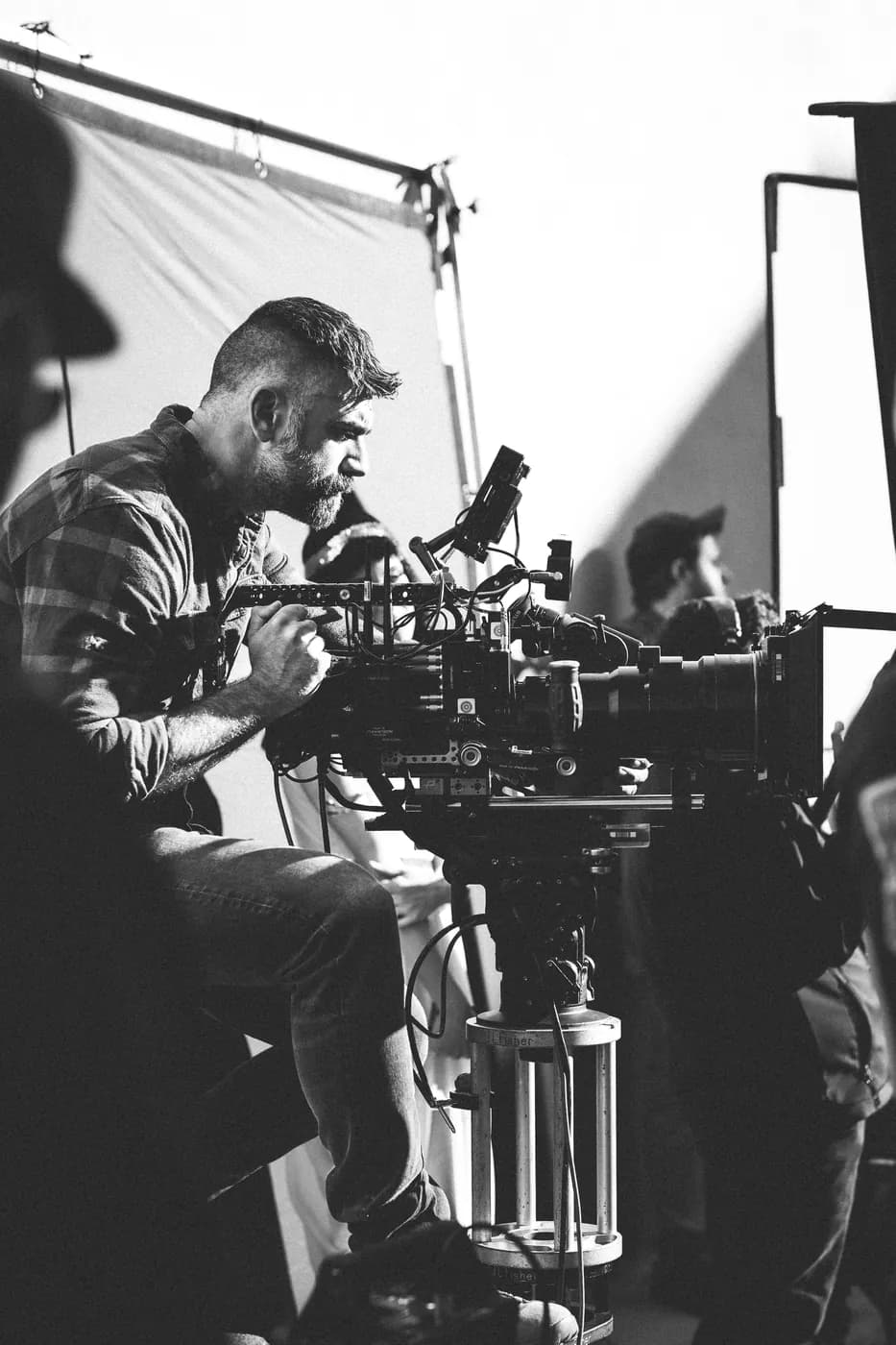
A note from the director
I’ve been developing Allentown for several years now, and the thing that keeps pulling me back is how much this story feels like right now. In 1982, three ordinary guys climbed a billboard because it was the only path to something most Americans take for granted: a place to call home.
That’s the story I want to tell. Not a period piece about the ’80s, but a film about what happens when the ground falls out from under you and the only direction left is up. Literally.
directed by
written by
produced by